Kitchen sink drain smells can turn a clean kitchen into an uncomfortable space faster than you expect. If you notice odors that keep returning, it’s often a sign that something inside the drain system isn’t working as it should. These smells may indicate buildup, airflow problems, or hidden plumbing issues that worsen over time. Here we are going to shed light on what causes drain odors, how to tell where they’re coming from, and which safe solutions actually help without putting your plumbing at risk.
Why Does My Kitchen Sink Drain Smell?
When a kitchen sink drain smells appear, the odor usually forms inside the drain system rather than the sink itself. The problem often starts with trapped organic waste, changes in water flow, or failed seals that allow gases to escape. Furthermore, each cause produces a slightly different smell, which helps narrow the issue before repairs begin. This is where understanding internal drain behavior matters more than surface cleaning.
Food Debris and Grease Buildup Inside the Pipe
Food scraps and grease rarely move cleanly through pipes. Grease cools and sticks to the pipe walls, trapping food particles. Eventually, this organic layer begins to break down, releasing strong odors. This buildup worsens in kitchen drains because the dishwasher carries fats, proteins, and starches daily.
Bacteria and Organic Matter in the Drain
Bacteria thrive in dark, moist drain environments. As organic matter decomposes, bacteria release sulfur-like gases. This process explains why smells intensify over time rather than dissipate on their own. However, surface rinsing does not remove bacteria deeper in the pipe.
Dry or Improperly Sealed P-Trap
The P-trap holds water, preventing sewer gases from entering the home. If that water evaporates or leaks out, gases move freely into your kitchen. This often happens in sinks that see light use or after minor plumbing changes. A loose or cracked trap can create the same issue.
Blockages or Venting Issues in the Drain Line
Drain vents regulate pressure and airflow. When vents clog or drain lines partially block, gases struggle to escape properly. As a result, odors push back through the sink opening instead. This problem often appears alongside slow drainage or bubbling sounds.
Signs the Smell Is Coming From the Sink Drain and Not Another Source
Not every bad smell in your kitchen starts in the pipes, which is why guessing often leads to wasted time and ineffective fixes. Drain-related odors tend to react to water flow, pressure changes, and usage patterns in ways other household smells do not. By noticing when the odor intensifies, where it is most concentrated, and whether it appears alongside drainage changes, you can separate plumbing issues from everyday kitchen sources and address the real problem with confidence.
Odor Gets Stronger When Running Water
If smells intensify while water flows, the source is likely inside the drain. Water movement disturbs trapped debris and gases, releasing odor upward. This reaction rarely happens with non-plumbing smells.
Smell Concentrated Near the Drain Opening
Odors strongest at the drain opening suggest a localized issue. This usually means a buildup in the P-trap or the immediate pipe section. Wider household smells tend to spread evenly, not concentrate in one spot.
Gurgling or Slow Drainage Along With Odors
Gurgling indicates an airflow imbalance inside the drain. This often links odors with partial blockages or vent problems. Slow drainage confirms that waste is not moving efficiently through the system.
How to Get Rid of Odor from the Kitchen Sink Drain
Addressing drain odors requires methods that break down buildup without harming pipes. Effective solutions focus on cleaning, restoring water seals, and improving flow. Let us see ways that can help to get rid of odor from sink drain issues safely.
Flush the Drain With Hot Water and Dish Soap
Hot water helps soften cooled, adhered grease on pipe walls, while dish soap reduces surface tension so fats can move instead of sticking. This approach is effective when odors are caused by light grease films rather than solid blockages. However, steady flow matters more than temperature alone, because consistent water movement carries loosened residue beyond the trap instead of letting it resettle closer to the sink.
Clean the Garbage Disposal and Splash Guard
Garbage disposals create fine food particles, but many odors form above the grinding chamber rather than inside it. The rubber splash guard traps moisture and organic residue, which breaks down and releases odor near the drain opening. Cleaning this area targets the source customers often miss, especially when smells appear immediately after running the disposal but fade between uses.
Use Baking Soda and Vinegar to Break Down Buildup
Baking soda followed by vinegar creates a foaming reaction that lifts soft organic residue from pipe surfaces. This method helps disrupt biofilm, a thin bacterial layer that traps odor-causing waste in the drain. While it cannot remove hardened grease or pipe obstructions, it can reduce smells when the buildup is shallow and spread along the pipe walls rather than packed tightly.
Remove and Clean the P-Trap if Debris Is Present
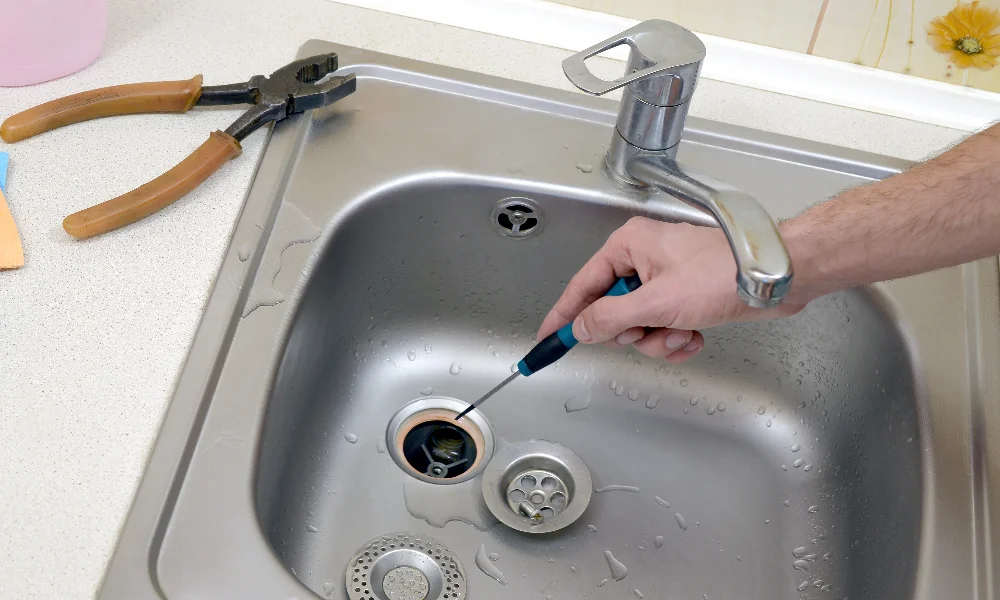
The P-trap is designed to catch debris before it enters the main drain line, which makes it a frequent odor source. Food particles, grease, and soap residue often settle here and begin decomposing, even when the sink appears to drain normally. Careful removal and reinstallation are important because an improperly sealed trap can allow sewer gases to escape back into the kitchen.
Avoid Harsh Chemical Drain Cleaners
Many chemical cleaners rely on corrosive reactions to dissolve clogs, which can weaken pipes and damage seals over time. They often push the residue further down the line rather than fully removing it, allowing odors to return quickly.
Many chemical drain cleaners release fumes that can irritate the eyes, lungs, and throat, especially when used in enclosed spaces like kitchens. The U.S. Environmental Protection Agency explains that volatile organic compounds (VOCs) from household products can significantly affect indoor air quality and pose health concerns when they are inhaled indoors.
When Kitchen Sink Drain Odors Signal a Bigger Issue
When kitchen sink odors persist after thorough cleaning, the issue often extends beyond surface buildup and into the plumbing system itself. These smells can indicate restricted airflow, developing blockages, or pressure imbalances that prevent waste and gases from moving properly through the drain. Over time, these conditions place added stress on pipes and connections, which increases the risk of recurring clogs, leaks, or sewer gas intrusion. Addressing the root cause early helps prevent minor odor problems from escalating into disruptive and expensive plumbing repairs.
Repeated Smells After Cleaning
When drain odors return shortly after proper cleaning, it usually means the source is located beyond the immediate sink components. In professional inspections, this often points to a buildup deeper in the branch line where household methods cannot reach. As waste continues to collect in these areas, gases form and travel back toward the sink opening, which explains why the smell reappears even though the visible parts of the drain are clean.
Multiple Drains Producing Odors
Odors coming from more than one drain rarely indicate a coincidence. From a plumbing system perspective, this pattern suggests a shared issue within the main drain or venting network. When airflow is disrupted or waste movement slows in these shared lines, gases can escape through the nearest available openings, causing smells to surface in multiple fixtures throughout the home.
Slow Drains or Frequent Clogs
Slow drainage, combined with recurring clogs, signals reduced pipe capacity. This narrowing typically develops as grease, soap residue, and organic waste adhere to pipe walls over time. As the passage tightens, waste remains in the line longer, which increases decomposition and gas production. This is why odors often grow stronger as drainage performance continues to decline.
Possible Sewer Line or Vent Stack Problems
Strong sulfur-like odors often raise concerns beyond routine drain maintenance. This is commonly when homeowners start asking, why does my sink drain smell like rotten eggs, especially if cleaning provides no relief. In many cases, the issue relates to blocked vent stacks or compromised sewer lines that prevent gases from venting safely outside. When this balance fails, sewer gases can be pushed back through indoor drains, which requires professional inspection to identify and correct safely.
How to Prevent Kitchen Sink Drain Smells
Preventing kitchen sink drain smells is less about quick fixes and more about reducing the conditions that allow odors to form in the first place. Drain systems work best when waste moves efficiently, and airflow remains balanced, but everyday kitchen use slowly disrupts that balance over time. Small, consistent practices help limit organic residue, prevent moisture from lingering where bacteria thrive, and protect the water seals that block sewer gases. When these fundamentals are maintained, drains stay clearer, odors are far less likely to develop, and the plumbing system experiences less long-term stress.
Avoid Pouring Grease or Oil Down the Drain
Grease and cooking oils may look harmless in liquid form, but they cool and solidify quickly once inside the drain. As they harden, they coat pipe walls and create a sticky surface that captures food particles and soap residue over time. Plumbers frequently find that long-term grease buildup is a leading cause of narrowed pipes, recurring odors, and premature drain failures, especially in kitchen lines.
Run Water After Each Use
Running water for a short period after using the sink helps move small food particles fully through the trap and into the main drain line. This steady flow reduces the chance of residue settling in low points where decomposition begins. Consistent flushing supports proper drainage performance and limits the conditions that allow odor-causing bacteria to develop inside the pipe.
Schedule Routine Drain Cleaning
Routine professional drain cleaning removes buildup that household methods cannot reach, including residue that accumulates deeper in the line over time. This is particularly important in kitchens with frequent cooking, dishwashing, or garbage disposal use. Proper system care also includes understanding how water quality affects plumbing, as mineral content and treatment methods can influence residue buildup, which is explained in this resource on whether water softeners are safe for septic systems.
Maintain Garbage Disposal Components
Garbage disposals rely on clean, unobstructed components to function properly. When food particles cling to internal surfaces or rubber guards, bacteria can form and produce persistent odors over time. Regular maintenance helps ensure waste is broken down efficiently and flushed away, which supports better drainage flow and reduces odor issues near the sink opening.
FAQs
Is a Smelly Sink Drain a Health Risk?
Occasional odors are usually not dangerous. However, prolonged sewer gas exposure can irritatethe respiratory system. Address persistent smells promptly.
Why Does My Sink Drain Smell Like Rotten Eggs?
This smell usually comes from sulfur gases produced by bacteria or sewer gas intrusion. When homeowners ask why their sink drains smell like rotten eggs, the answer often involves venting issues or dried traps rather than simple debris.
Is Bleach Good For Smelly Drains?
Bleach disinfects surfaces but does not remove buildup. It can also damage pipes with repeated use. Targeted cleaning works better long-term.
Call Rodeo Plumbing and Drain for Professional Drain Cleaning in Chandler, AZ
Kitchen drain odors often start small but signal bigger plumbing concerns when ignored. By understanding causes, spotting warning signs, and using safe solutions, you protect your home and health. When smells persist or return, professional care matters. Rodeo Plumbing and Drain offers expert drain inspections and cleaning services in Chandler, AZ, helping you eliminate odors at the source and restore proper flow with confidence. Contact us now!


