Tree roots in a sewer line might disrupt an otherwise regular day. When drains clog, toilets bubble, or foul odors permeate the yard, most homeowners begin looking for quick fixes. A common query is whether a simple home item can help. Many wonder, will vinegar kill tree roots in sewer line? Vinegar appears to be a safe and useful solution, but it cannot solve all underground problems. Before you grab a bottle, it’s important to understand what vinegar can and cannot accomplish, as well as when professional help is needed.
Will Vinegar Kill Tree Roots in a Sewer Line?
What Vinegar Can Do
Damage Small or New Root Growth
Some people try cleaning sewer line with vinegar, hoping its acidic nature will break down roots. Vinegar can harm delicate root strands that have only recently begun to penetrate microscopic fractures. It can slightly dry out new growth, although the effect is minimal and transient. However, for someone investigating natural approaches, this minor effect may appear beneficial.
Slow Down Minor Root Intrusion Temporarily
Vinegar can temporarily impede the migration of thin, newly formed roots. When homeowners ask will vinegar kill tree roots in sewer line, it’s important to understand that vinegar acts more like a short pause button than a solution. It annoys little intrusions but does not address the root cause of the problem.
What Vinegar Cannot Do?
Kill Deep or Established Root Systems
Outside the pipe, roots receive strength from the soil rather than the sewage. Vinegar inside the pipe cannot penetrate the deep, dense roots that nourish the intruder. This is why vinegar is not a reliable method for anyone wondering how to get tree roots out of sewer line.
Eliminate Root Blockages Inside the Pipe
When roots become thick enough to hold waste and develop clogs, vinegar is powerless to break them up. Established root masses must be forcefully removed. A moderate household product cannot penetrate a dense obstruction.
Prevent Regrowth, It's Just a Temporary Solution
Even if vinegar damages little roots, they always regenerate. The main tree’s roots continue to grow toward the moisture inside the sewer line. Using vinegar becomes a temporary solution that postpones the inevitable. This makes cleaning sewer line with vinegar an unreliable long-term approach.
Risks of Using Vinegar for Root Removal
Possible Corrosion to Older or Metal Pipes
Older clay or metal pipes may react negatively to repeated vinegar contact. Acid can damage delicate areas and exacerbate minor cracks. Instead of stopping roots, this may generate avenues for further penetration. Using vinegar excessively may create more harm than benefit.
How Professionals Get Tree Roots Out of Sewer Lines
Mechanical Cutting With Rooters
Professionals employ root-cutting devices with blades that can cut through thick vegetation. This procedure promptly clears the pipe and restores flow. It works effectively for older homes with several obstacles.
Hydro Jetting To Clear and Flush Out Root Debris
Hydro jetting employs high-pressure water to dislodge roots and remove debris from sewer lines. This procedure cleans the pipe walls and expels waste with great power. Anyone wanting a sure method for how to get tree roots out of sewer line should consider hydro jetting.
Root-Killing Foams or Chemical Treatments
Plumbers occasionally use special foams to treat the entire pipe interior. These treatments stop tiny roots and aid to prevent rapid regrowth. They are far more effective than cleaning sewer line with vinegar, which only reaches small areas.
Pipe Repair or Replacement for Severe Damage
If roots crack a sewer pipe, it may need to be repaired or replaced. Modern PVC piping is root-resistant and lasts longer than old clay or cast iron. When the damage is serious, replacing the pipe protects the home from further problems.
Signs of Tree Roots in Sewer Lines
Slow-Draining Toilets or Multiple Fixture Clogs
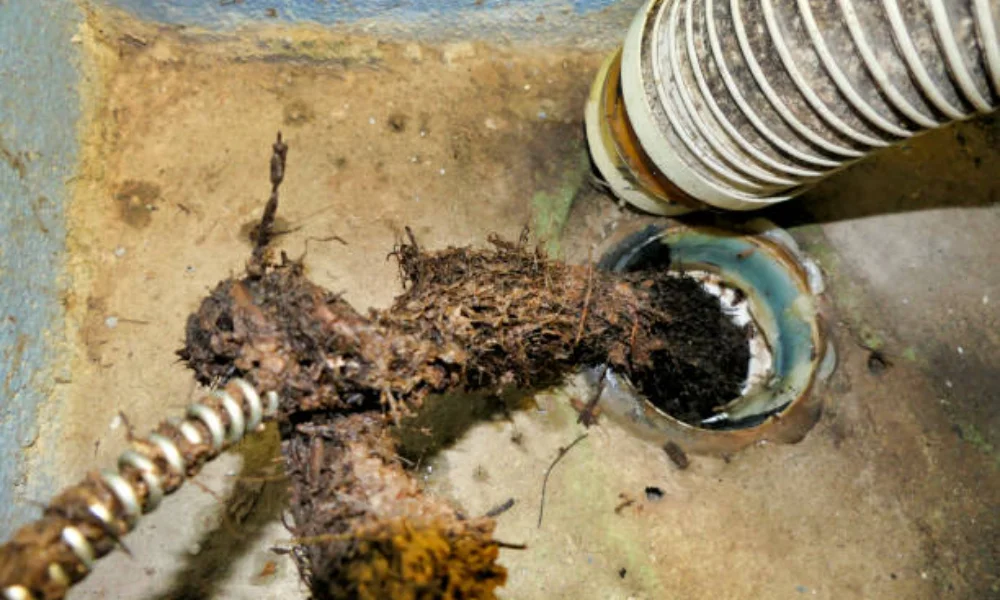
When numerous fixtures drain slowly at the same time, roots could be clogging the main sewer line.
Gurgling Sounds or Air Bubbles in Drains
Gurgling noises frequently indicate trapped air, which roots can produce by impeding flow.
Sewage Odors or Water Backups in the Yard
A nasty odor in the yard indicates a sewage leak. Roots may be pushing into the pipe, forcing wastewater out.
Recurrent Clogs Even After Cleaning
If obstructions persist, roots may be spreading deeper into the system.
How to Prevent Tree Roots Intrusion in the Sewer Lines
Schedule Regular Sewer Camera Inspections
Routine inspections detect early cracks and assist to prevent root incursion before it gets severe.
Replace Old Clay or Cast Iron Pipes With PVC
PV pipes are more resistant to root entrance and can withstand pressure.
Install Root Barriers Near Trees and Shrubs
Root barriers deflect roots away from sewer pipes, preventing further damage.
Avoid Planting Large Trees Close to Sewer Lines
Planting huge trees away from subsurface infrastructure lowers the possibility of roots spreading into sewer pipes.
Call Rodeo Plumbing and Drain for Comprehensive Sewer Line Solutions in Arizona, Nevada, and Utah
When tree roots penetrate your sewer line, vinegar alone will not save it. Instead of depending on quick fixes, allow specialists to manage the problem with the proper tools and long-term solutions. Rodeo Plumbing and Drain serves Chandler, AZ, Las Vegas, NV, as well as Salt Lake City, UT, with dependable services that keep your house safe from costly sewer damage.
When tree roots invade, vinegar alone cannot save your sewer line. Instead of relying on temporary fixes, let experts handle the issue with the right tools and long-lasting solutions. Rodeo Plumbing and Drain serves Chandler, AZ, Las Vegas, NV, and Salt Lake City, UT, offering trusted services that protect your home from costly sewer damage.
If you need prompt, professional assistance, call Rodeo-Plumbing and schedule your appointment immediately. Allow Rodeo Plumbing and Drain to clear your sewer line and keep your plumbing running properly.


